


Nigeria has been the biggest oil producer in Africa. Nigeria has had fuel shortages.
These two things shouldn't have been possible at the same time, but they were.
Nigeria exported crude oil, then used the scarce foreign currency to buy back petrol and diesel from countries with refineries.
It was a bit like exporting $10 notes and buying them back for $15.
Dangote Petroleum Refinery (Dangote PR) is the $20 billion project attempting to fix that, and it is now selling shares to the public in the biggest IPO in African History.
Before we get to the price, this article explains how the business actually works and what an investor would be buying into.
Let’s unpack!
The Big Picture: Why Nigeria Needed It
Crude oil cannot go straight into a petrol tank. It has to be processed in a refinery. This costs billions to build. About 825 are in operation worldwide and fewer than 50 in Africa.
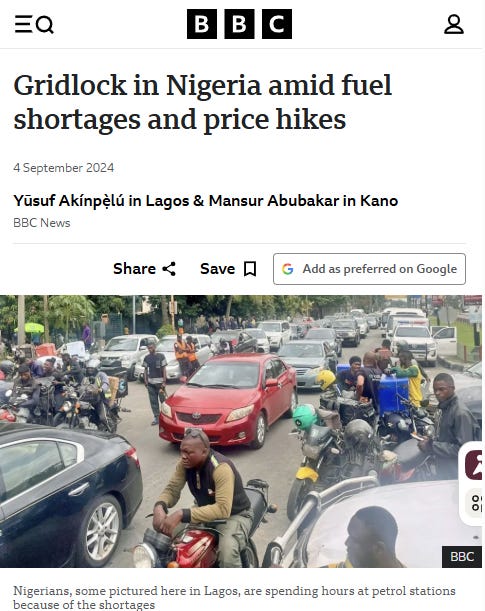
Nigeria had four state-owned refineries, but they all operated below capacity for over two decades, resulting in scenes like the one below where, despite being the largest Oil Producer in Africa, Nigeria still had fuel shortages.
This situation has existed for years and is the type of problem that Dangote has specialised in solving.
Find a product with massive, unavoidable demand, then find a way to supply it to the market and, in return, generate big profits.
He did that with cement, then sugar and is now doing the same with petrochemicals, perhaps the most ambitious sector yet.
Now, before getting into the details of valuations and whether it’s a good investment, it's really important to understand what the business on offer is. So we will start there and walk through the business model step by step.
Step 1: Sourcing the Crude
A refinery starts by buying the raw material, crude oil. Of that, Dangote PR’s plant can process up to 700,000 barrels a day, enough to cover 28 football pitches.
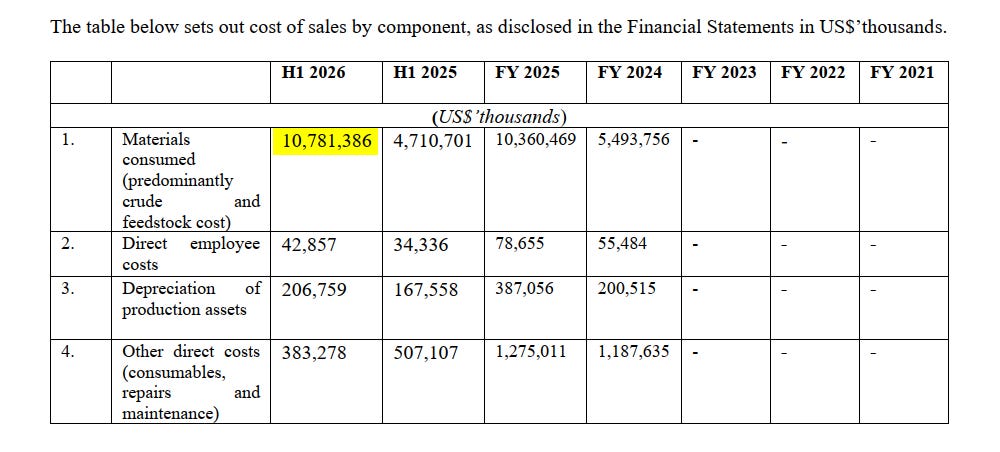
Crude is the most expensive part of the business. In the first half of 2026, the cost of materials consumed was $10.8 billion, primarily from crude and feedstock (other inputs).
This creates the first big tension in the model: securing the crude oil. This is not a simple process.
To keep costs manageable and limit currency risk, Dangote PR wants to buy as much local crude oil as possible. In 2025, about 60% came from Nigeria
The crude is bought from the Nigerian National Petroleum Company (NNPC) under the government’s crude-for-Naira programme, which was created to promote local production.
However, the supply of that crude is not guaranteed and can fall behind. In 2025, Dangote Refinery said it would suspend sales in Naira because it hadn’t received enough crude locally. Below is the statement the company issued.
"To date, our sales of petroleum products in Naira has exceeded the value of Naira-denominated crude we have received. As a result, we must temporarily adjust our sales currency to align with our crude procurement currency"
The reason this was a problem is that, to make up for the other 40% they can’t get locally, Dangote Refinery has to buy from the international market. This means paying in USD.
If local supply falls short, Dangote has to buy more abroad, and its dollar bill goes up, and with billions at stake, a small mismatch can result in a lot of problems.
So managing this crude supply is a critical part of the business. How well Dangote’s team can manage the politics and practicalities of this is critical.
But once you source the crude, there is still more complexity.
Step 2: The Processing Engine
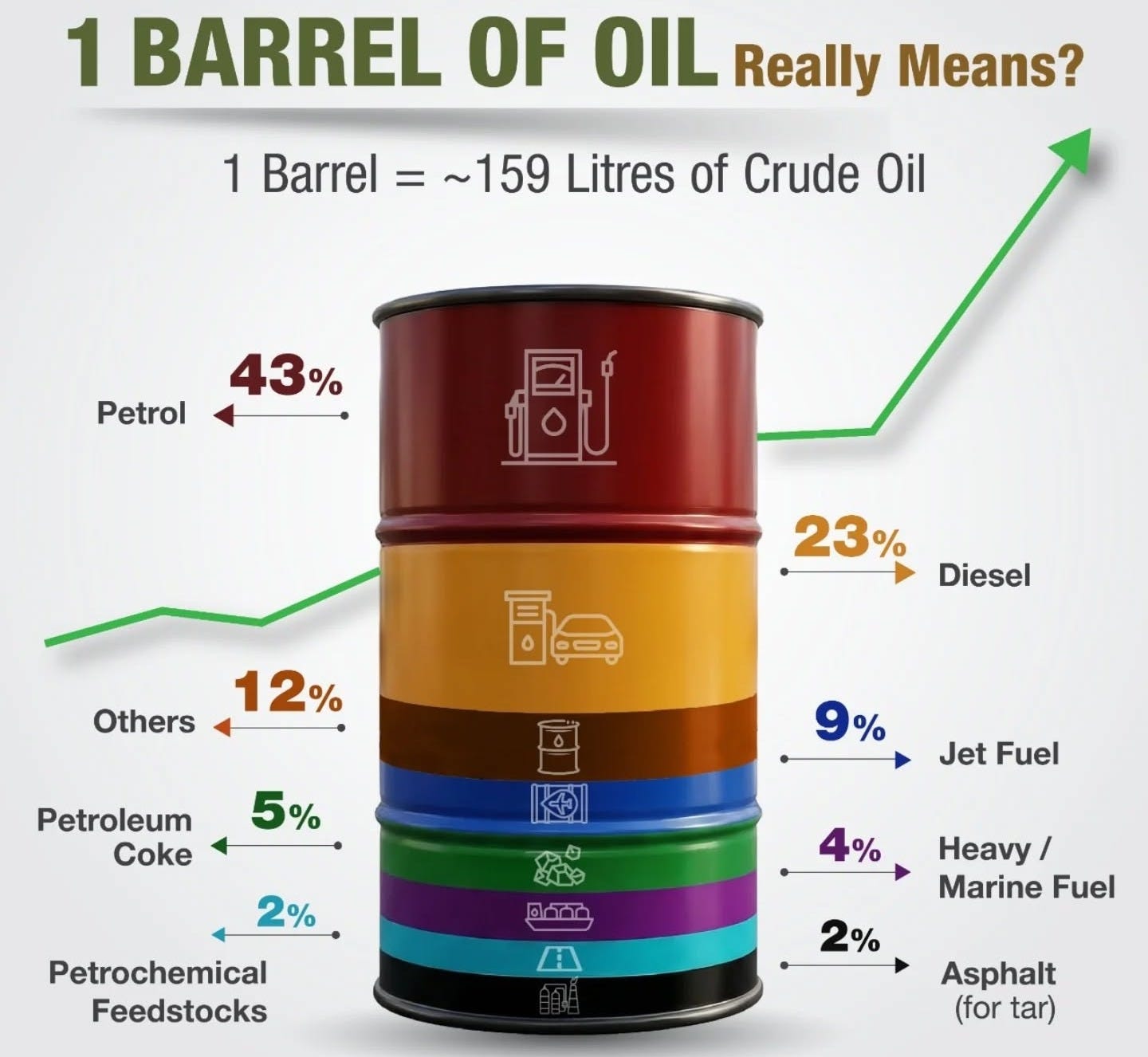
Once crude is sourced, the refinery processes it into various petrochemicals, with the largest shares being petrol and diesel. However, there are a lot of other products that are produced, including jet fuel.
But not all crude is the same. Light, sweet crude is thin and low in sulphur. It is easier to refine but costs more to buy. Heavy, sour crude is thick and high in sulphur. It needs a complex plant but is cheaper to buy.
This is where the Nelson Complexity Index (NCI) Factor comes in. NCI is a measure of a refinery's sophistication. Dangote PR is rated at 11.5, higher than the weighted average for most emerging markets, which is 8.9.
A simple refinery with an NCI below 5 can typically handle only expensive light crude, which costs more, resulting in lower margins.
At 11.5, Dangote PR can buy the cheaper grades and still process them to high standards. This is one of the refinery's advantages.
Then there is something else unique about the refinery. Dangote Refinery is the largest single-train refinery in the world, with a capacity of 700,000 barrels per day.
A single-train refinery processes all incoming crude oil through a single continuous production line anchored by a Crude Distillation Unit (CDU), rather than splitting throughput across multiple parallel processing units.
This setup at the scale Dangote PR operates on is rare. Of the 20 largest refineries in the world, only Dangote PR’s is single-train. The next biggest is less than half the size of Dangote PR.
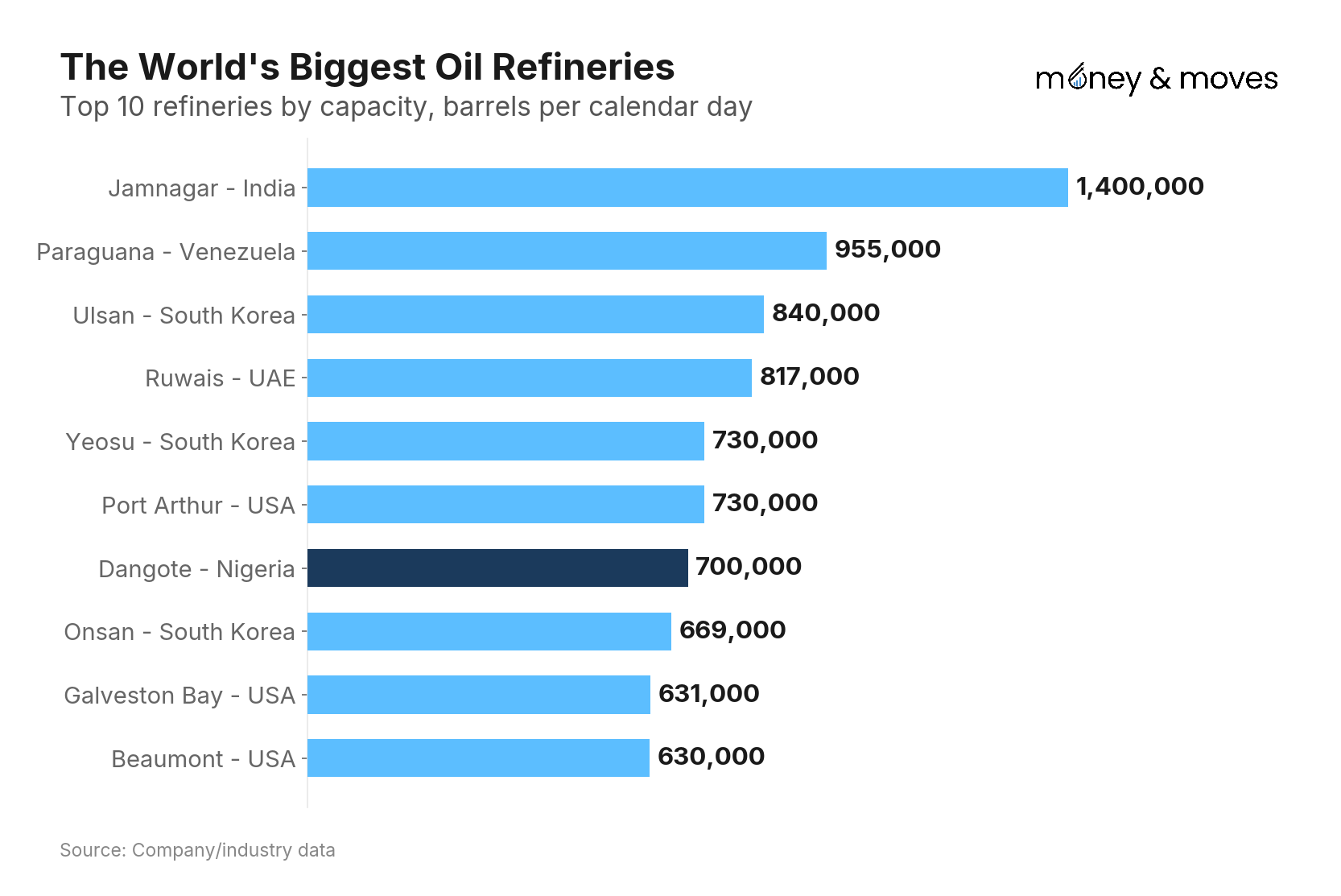
The benefit is economies of scale, but it also creates a single point of failure. If the Crude Distillation Unit (CDU) goes down unexpectedly, no more new crude oil can be processed.
To mitigate this, Dangote designed the refinery to include additional units, independent of the CDU, to process intermediate stocks.
So while the CDU is down, the refinery can process partially processed products stored in reserve tanks with a capacity of 4.7 billion litres.
This allows units like the Residue Fluid Catalytic Cracker (RFCC) to crack heavy residue streams into lighter gasoline and diesel components. However, even this is designed as a short-term measure.
Ultimately, this is arguably one of the biggest risks. A single-train refinery at a single location could have a massive impact if something goes wrong on a large scale. This is also a risk highlighted in the IPO prospectus
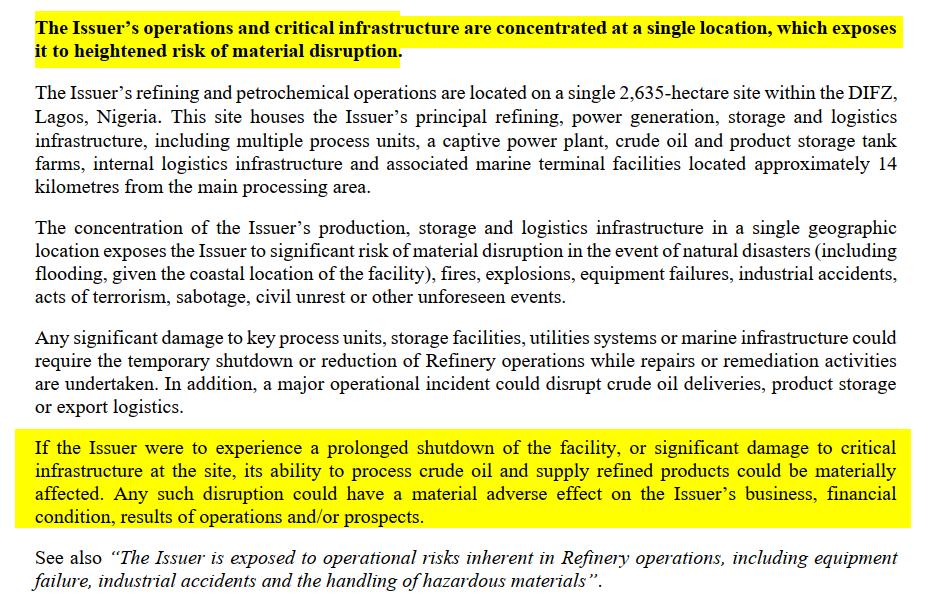
There are probably good reasons why all other major refineries haven’t taken this approach.
However, as long as there is no major failure, all is well; if one does occur, it could have a significant impact.
This is also why most of the IPO proceeds are going towards setting up another processing line to help reduce that risk.
Now, once you have refined it, you still have to sell it, which is not as simple as you may expect.
Step 3: Selling the output
There is a common misconception that high oil prices are good for Dangote PR’s business.
This is not necessarily the case, as oil prices are an input to the refining process, and what Dangote sells is the Petrochemicals (petrol, diesel, jet fuel, etc.).
The gap between the price of crude oil (the raw material) and the price the market pays for petrol, diesel, and jet fuel is the business's margin, often referred to as the crack spread or gross refining margin.
If the price of crude goes up, there may be a limit to how much the price of petrol, for example, can rise, thereby squeezing margins. For example, Dangote supplied about 87.6% of all petrol in Nigeria, including imports. A steep price increase may not be easy to pass on.
At some price level, either there will be pricing pressure or demand will fall if the price of oil rises significantly.
The other challenge Dangote faces is dealing with cheaper fuel imports. These have two adverse effects.
Firstly, Inventory & Export Pressures. Unpredictable fuel imports create demand uncertainty. At times, this can mean Dangote PR ends up holding too much inventory, an additional cost that may force exports to other markets at lower prices just to move it.
The other is Pricing Wars: The constant influx of imported alternatives limits the refinery’s domestic pricing power, forcing it to make continuous price adjustments to stay competitive.
The above reasons are why Dangote has been fighting about fuel import licenses.
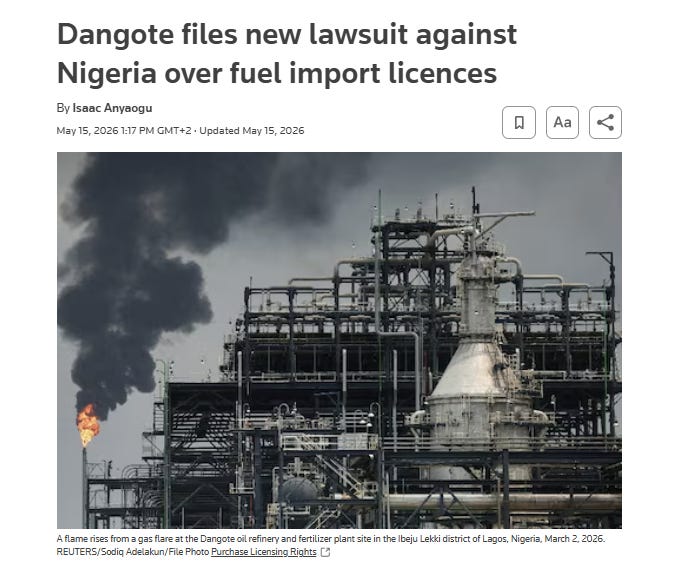
Dangote’s main argument is that regulations allow imports only when supply is insufficient, while importers say that without them, Dangote would gain a dangerous monopoly.
Honestly, both sides have good arguments, but after spending $20 billion on a project that took over 10 years, I can see why Dangote will push hard for his position.
This also perhaps explains why the IPO is happening, but more on that later.
Another key part of the business is not just selling locally; it’s exports.
In Q1 2026, 42.5% of sales volumes were from exports. Dangote Refinery has sold to a number of other African markets, including Togo, Ghana, Cameroon, Benin, Ivory Coast, South Africa, Morocco and Mauritius.
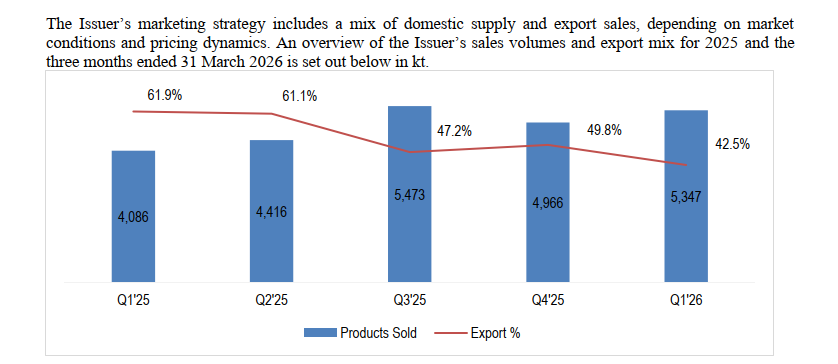
Another benefit of exports is helping to keep that supply side in balance; without USD income, it becomes harder to ensure the certainty of your international supply, which is about 40% of crude purchases.
I think this export focus may also explain why, over the last year, he made many more trips across Africa, even visiting Zimbabwe after being away for several years.
Step 4: Managing Risk 24/7
As you can see from all the above, at the end of the day, the business is about managing risks every day.
The core threats to the refinery’s margins fall into three main categories:
Currency Risk: The ongoing USD/Naira dynamics create a mismatch that requires continuous management. The business operates on a USD basis but also sources and sells in Naira. Rapid devaluation of the Naira or a mismatch in the currencies of income and expenses can create big problems.
Policy Risk: Any shift in how the government handles fuel pricing, grants import licenses to competing marketers, or allocates local crude supply could have a big impact on the business. We have already seen Dangote involved in a number of policy-related disputes.
Operating Risk: As mentioned, a massive, single-train facility in one location creates a critical single point of failure.
Balancing these compounding pressures will be the true test of the refinery’s long-term success.
If you believe they can pull this off, you have a strong case for investing.
What are you buying into? Why is Dangote having an IPO?
With the business model explained, the last question is: what are you buying when you invest in the IPO, and why is Dangote selling?
Well, the offer is for 4.1 billion shares at N525 per share. This is for about 3% of the company.
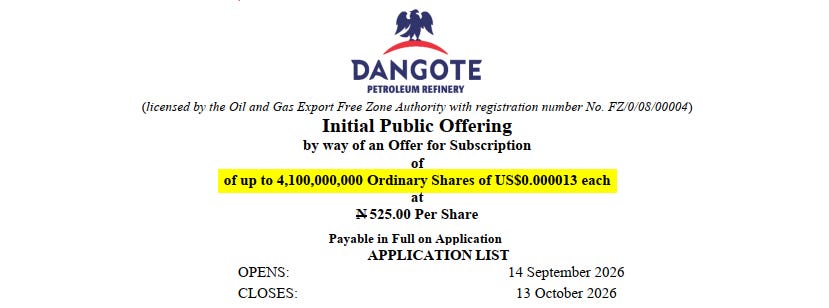
After the IPO and private placements, Aliko Dangote will still control about 84% of the company. So, as a shareholder, you are betting on Dangote, as he will still make all the decisions and retain all control.
That is not necessarily a bad thing. Few businessmen in the world have navigated as effectively as he has.
However, it does mean you will need to be prepared to trust him, as there are many related-party transactions at play. In the first half of 2026, related party transactions total $240m.
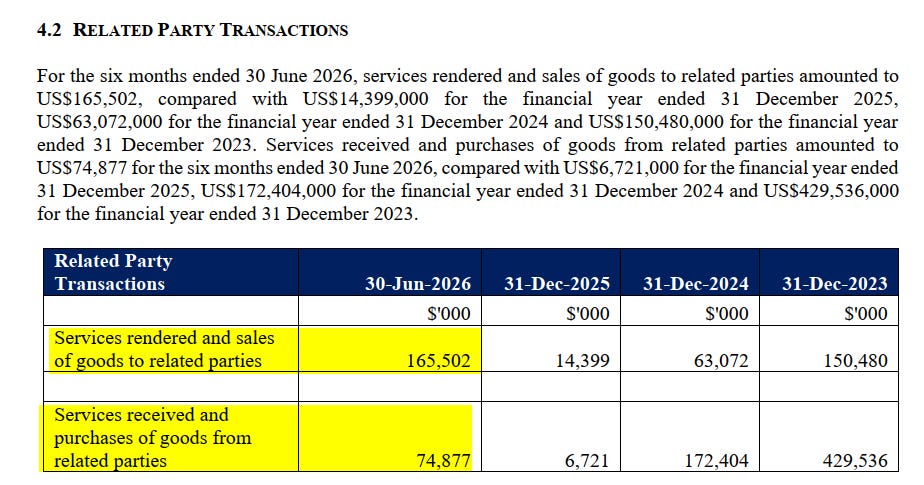
This may make some more uncomfortable, but it’s something that comes with the territory.
Why is Dangote doing the IPO?
Well, one reason is he has said it’s part of a broader effort to “democratise” ownership and bring more Africans into the capital markets. This is good.
The other reason is probably just pure business.
Many of the risks that Dangote Refinery will need to navigate can be influenced by policy. Whether it’s crude oil supplies, foreign-currency policy, import licences, or fuel pricing. All of it is about policy.
If the company is seen as just Dangote’s thing, then an adverse policy is seen as affecting only him.
However, if he has millions of small shareholders, it’s the people's company.
Having many people feel connected to the refinery could provide additional clout when lobbying against certain policy positions.
I mean, can you imagine the bad press that will result if Dangote PR fails now because of a new regulation or policy?
This is one of the best uses of an IPO. Get more people on your side, which perhaps explains why the IPO has been aggressively marketed to retail investors. The more, the better.
Dangote has repeatedly said he didn’t need to raise capital from the public markets; what he really needed was to raise support. What better way than inviting the whole country into your company?
Well, now that we have a good understanding of the business, the final question is whether this is a good investment, or, as we often say, “Where’s the Money, What’s the Move?”
Is the Dangote IPO a Good Investment?
The only financial reason to invest in an IPO is that you believe the price after listing will be higher than the price before.
In theory, this should happen when a company is undervalued before listing. But historic listings are a strange thing. Just check out what happened with SpaceX. IPOs can be more about hype than fundamentals.
In Part 2, we will look at the mechanics of the offer, the financials, and the valuation.
We will then conclude on whether this is a good investment, or just another story dressed up as one.
Part 2 lands this week.
Thanks for reading. Think someone in your network should see this analysis? Forward this email.
PS: I am working with public information, so I could be missing something or just wrong!
Really appreciate this post. The IPO and the noise around it has been interesting. Question is, is there value as an African to invest as well and what are the subscription options available to international investors so far?