


The Dangote IPO will probably make people money, but not for the usual investment reasons.
If you are considering the IPO, trying to understand financial markets, or learning about entrepreneurship, this is one to study.
Let’s unpack!
NB: This is a follow-up to Part 1 on the IPO, where we focused on understanding the business model.
Why Buy an IPO?
The only financial reason to buy a stock during its IPO is that you believe the price will be higher after the IPO than before it.
If you think the price will fall, you would just wait and buy after the IPO.
And falling prices are common. Over a sample of 9,195 IPOs (1975 to 2021), 56.1% were negative after three years.
Of those, 35% lost more than half their value.
So buying into an IPO often doesn’t work out.
That said, there are big winners too. About 0.5% of IPOs delivered 10x your money in less than three years.
The highest 3-year buy-and-hold return from the offer price is that of Yahoo! in 1996.
The stock jumped 153.8% on the first day and then rose another 3,589.8% over the next three years. So $100 invested in the IPO was worth $254 after the first day, and $9,365 after 3 years.
The question is how you stay away from the first group and get closer to the second.
Valuation: Is the Dangote IPO Priced Aggressively?
The idea behind all investing, not just IPOs, is to buy a stock at an attractive price, ideally with a decent margin of safety.
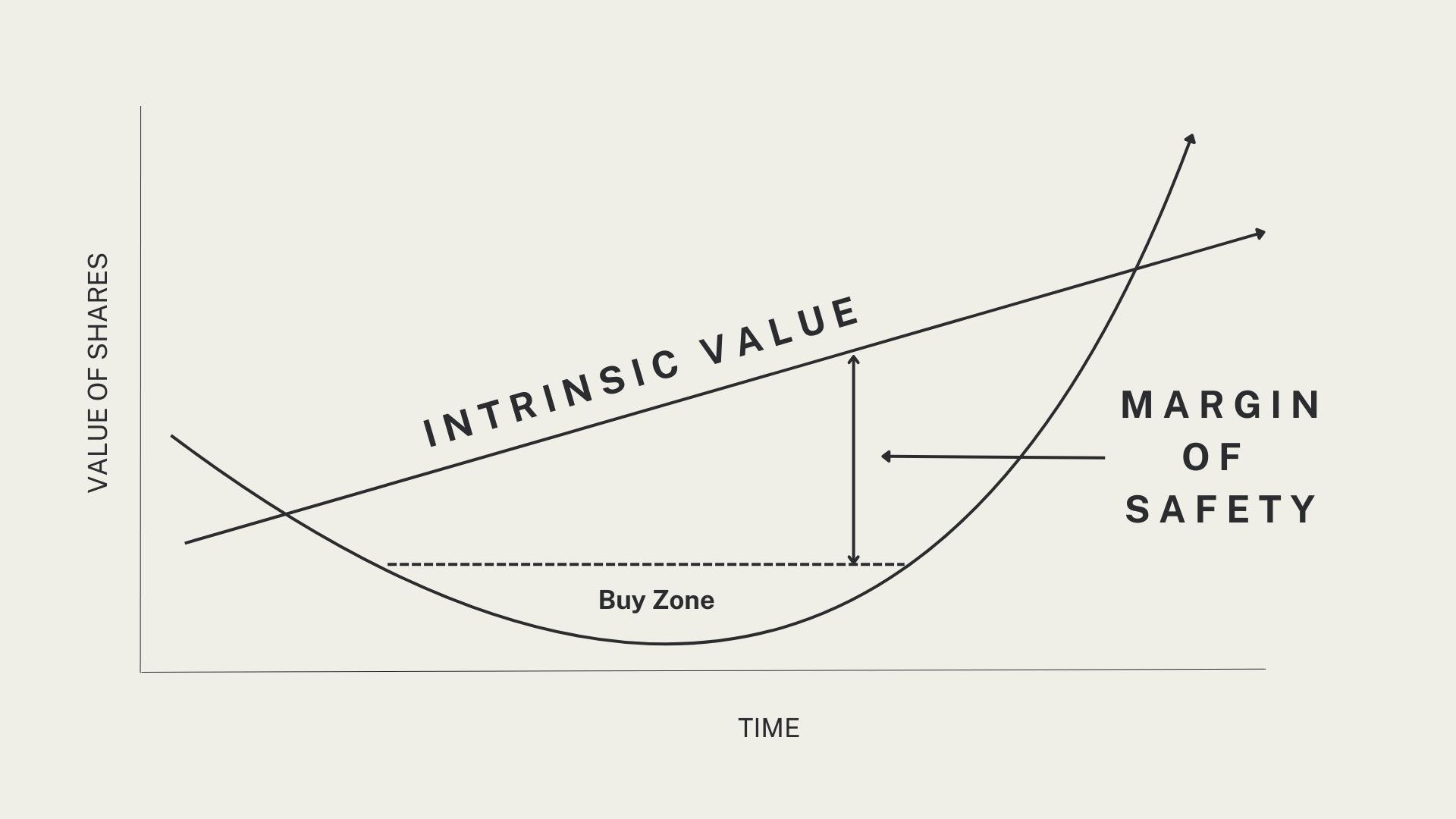
If you value a stock at $10, then it’s ideal to buy it at $6.
That way, if your valuation was off, say it’s actually worth $8, you still end up on top.
To do this, you need to value the stock.
How to value a stock
There are many ways to do this. One is to estimate the cash flows the business will generate and build a discounted cash flow (DCF) model. This is often called intrinsic valuation.
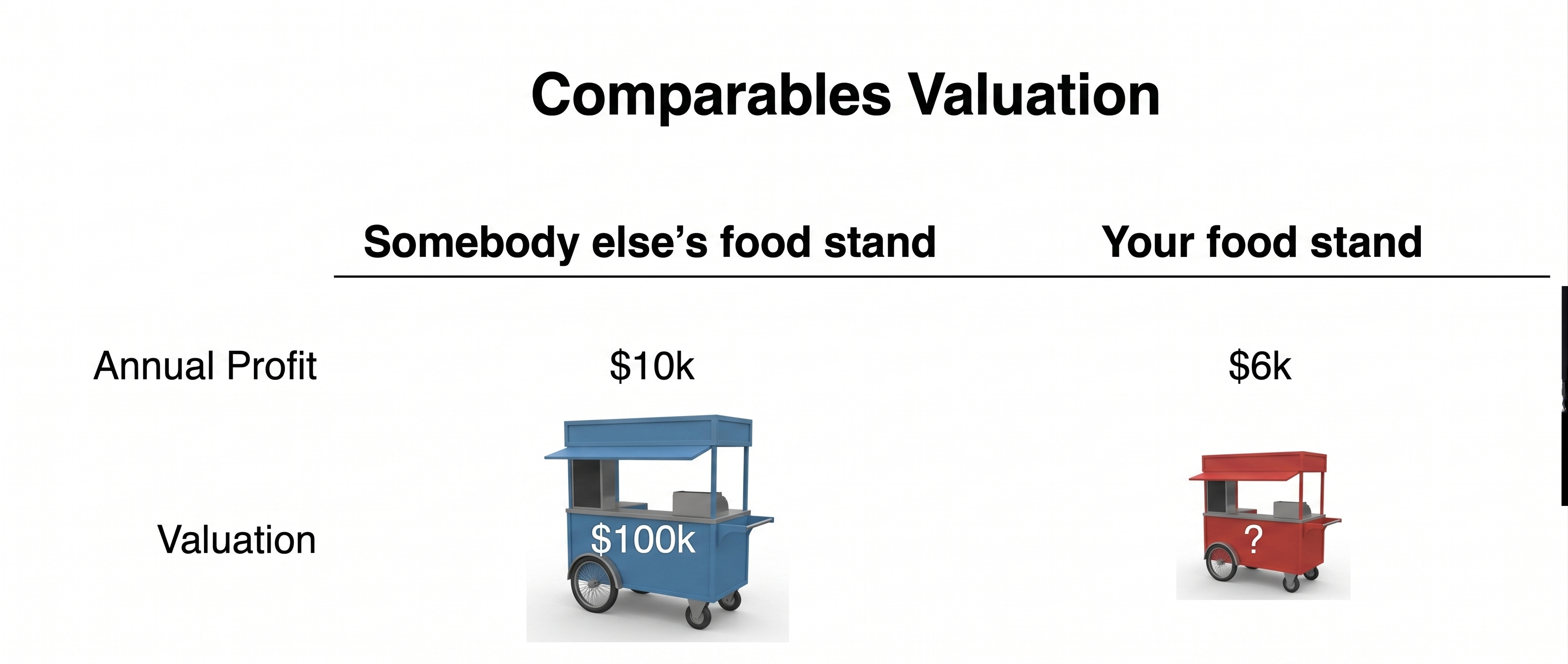
The other is to use comparables. This means comparing the company to similar publicly traded businesses.
This is usually the quickest way to get a sense of value.
Like in the example below, the other food stand you could assume would be worth around $60k
Dangote vs Valero and HF Sinclair
Below is a comparison of Dangote against two listed refiners, Valero Energy and HF Sinclair.
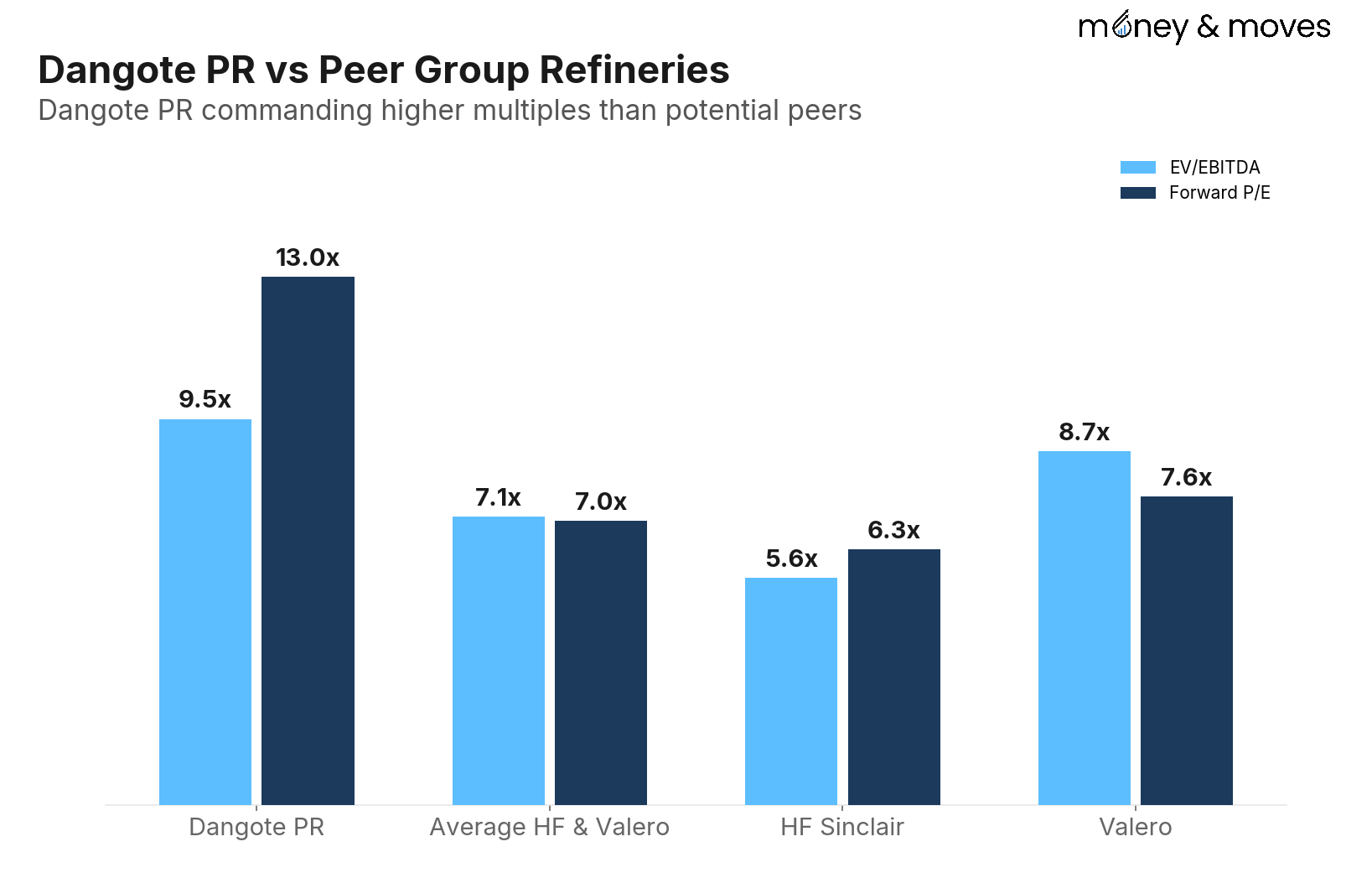
As you can see, on all metrics, Dangote PR seems to be priced at a premium. Dangote has a forward PE ratio of 13. Valero and HF Sinclair average out at 7.
The EV/EBITDA tells the same story. Dangote is at 9.5, while Valero and HF Sinclair are averaging 7.0x
On paper, the Dangote valuation looks on the high side.
The case for a premium
There are reasons a premium could be warranted.
Growth prospects are better. Both Valero and HF Sinclair are based in the US, a fairly mature market, while Nigeria and the rest of Africa still have a lot of room to grow.
Dangote also has a virtual monopoly; it recently was supplying 86% of Nigeria’s domestic demand.
The case against
Others will point out that there are also reasons to discount Dangote PR’s valuation.
First, there is the FX risk of operating in Nigeria.
Then Dangote PR is in a single location and also a single-train refinery, which increases operational risks (discussed in part 1). Also, operating in Nigeria is generally harder than operating in the US.
So there are pros and cons, but all things considered, the valuation may be on the high side.
So it is not an IPO where it's a clear buy low and sell high situation.
But how much does valuation really matter here?
Do you need to buy low and sell high, or can you buy high and sell higher?
To answer that, we need to look at what actually drives stock prices, especially in IPOs.
When Valuation Doesn’t Matter (As Much): Hype and the Dangote Premium
In investing, we sometimes forget that stock prices go up only because of increasing demand at increasing prices. Simply put, stocks go up because people buy them.
It’s not because a stock is undervalued,
Now people may buy a stock because it is undervalued, but there are many other reasons.
Some buy because they like the company or vision; others are because of the fear of missing out (FOMO). Others just buy because they like the founder.
With this IPO, much of the demand will come from people who like and trust Dangote and have FOMO.
The hype machine
This is part of the genius Dangote has orchestrated. There is so much hype and anticipation that essentially everyone is invested in this IPO.
There are 40 approved banks, fintechs and mobile operators where investors can buy refinery shares. All of them are pushing the Dangote share.
Even countries like Zimbabwe, which were not the target market, are looking to get in. There have been memes and jokes about it.
Dangote has been doing so many press tours and interviews talking about the IPO.
This has been a smart move because it's building demand from people who want to buy the stock; the demand is enormous.
Credibility capital: the Dangote Premium
Part of this is what I call the Dangote Premium.
Certain entrepreneurs, through reputation and strong brand-building, develop a following that simply believes in them.
The best example is Elon Musk and the Elon Premium. His companies often trade at a steep premium to peers because people believe that whatever the problem, he will find a way.
Take Tesla, for example; its PE ratio is currently 392x. Most car companies are below 20x; for example, Toyota's P/E ratio is 8.
Tesla fans will be quick to point out that “Tesla is not a car company but a Tech Company that sells cars”.
Even then, when compared with tech companies like Microsoft, NVIDIA, Apple, and Google, all of them have P/E ratios in the 20x-40x range, not 392x.
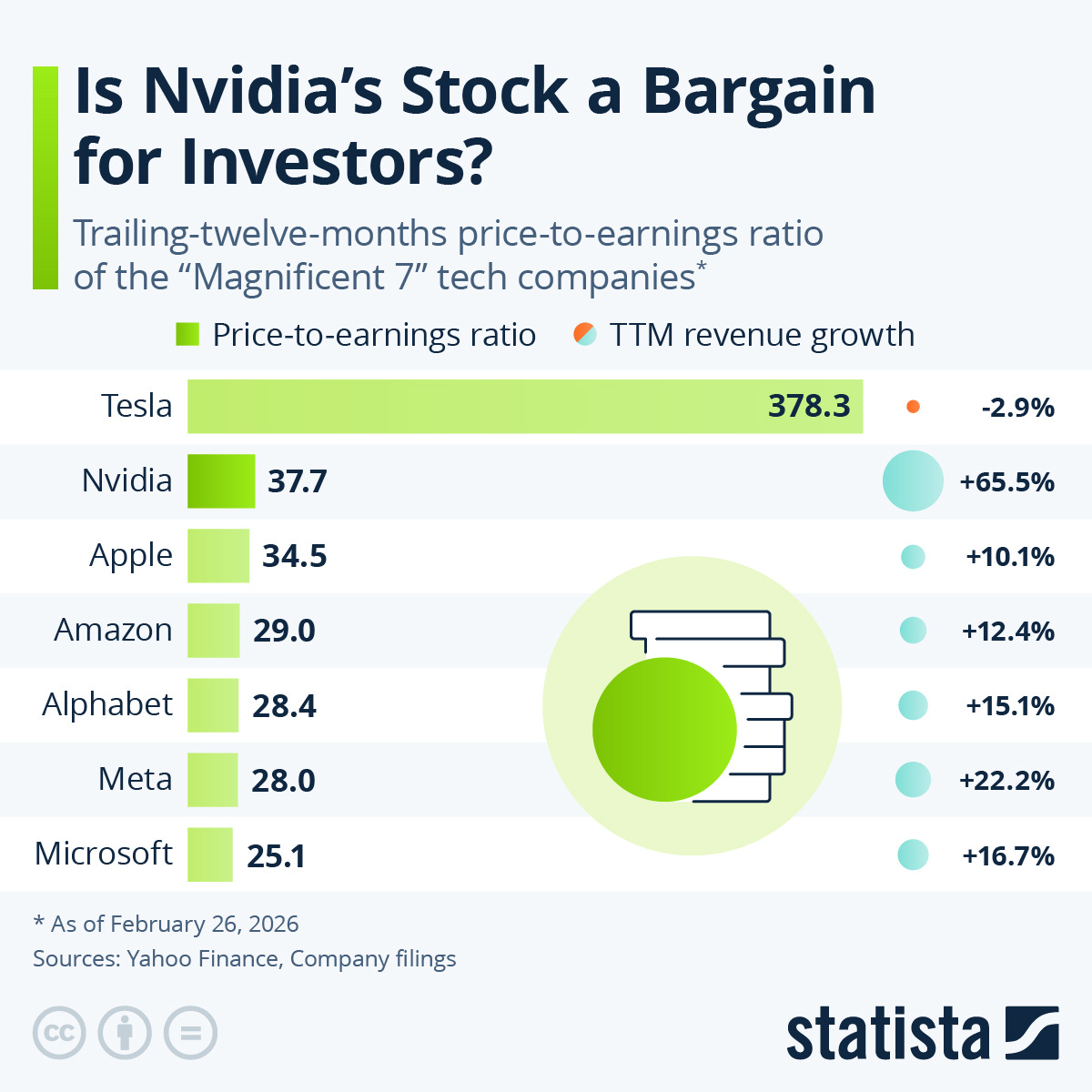
Built into that higher valuation is the Elon Premium. Companies he runs have a premium because people believe he will somehow find a way to make it work.
If Elon can have a premium, why can’t Dangote? He has proven he can make incredibly hard things work.
Just the fact that the refinery has been completed and is operational is an amazing feat.
This premium can be called credibility capital, and it is valuable to build as an entrepreneur.
Once you have shown you can do something incredibly hard, people give you the benefit of the doubt in future. If you also build a brand around yourself, you can cash that in, especially in the public markets.
Elon can say almost anything, and people will back him because he has pulled off crazy things before.
For Africa, Dangote is the same. I would even say the Dangote Premium is still fairly modest compared to the Elon Premium. Look at Tesla’s or SpaceX's valuations; the premium is huge.
So when you factor in the Dangote Premium, then the valuation doesn’t look too bad.
What Will Happen With the Dangote IPO?
Day one
Given the demand, I think the IPO will do well. There will be a spike on day one.
This will also give confidence to the many investors buying shares for the first time.
As a result, fewer people will be willing to sell, which reduces supply. More buyers coming in will then keep the price high.
After the initial hype
As with many IPOs, after the initial buzz, the share price should come down a bit. But I don’t think it falls below the IPO price in the first few months.
Only about 3% of the company is on offer, and the shares from July’s private placement are reportedly locked up for a year, so early supply is limited. Demand also looks strong, and investors who miss out on their IPO allocation may buy after listing.
The banks, the capital markets and, of course, Dangote all have a big incentive to make this IPO a success. When so many parties want the debut to go well, you’d expect strong buying interest on any early dip.
The harder test comes later. Refining margins, operational risks, the naira and the end of that lock-up will matter more than the opening weeks.
Where’s the Money? What’s the Move?
It depends on what you are looking for.
As mentioned, there is a good chance the stock goes up after the IPO. But this is not one of those Facebook stories where $100 turns into $10,000 in a few years.
The pricing is already on the higher side, so there won’t be a massive 10x uplift.
Also keep in mind that crack spreads (refining profitability) are currently at all-time highs. If that changes, profitability will drop, and so will the business's implied valuation.
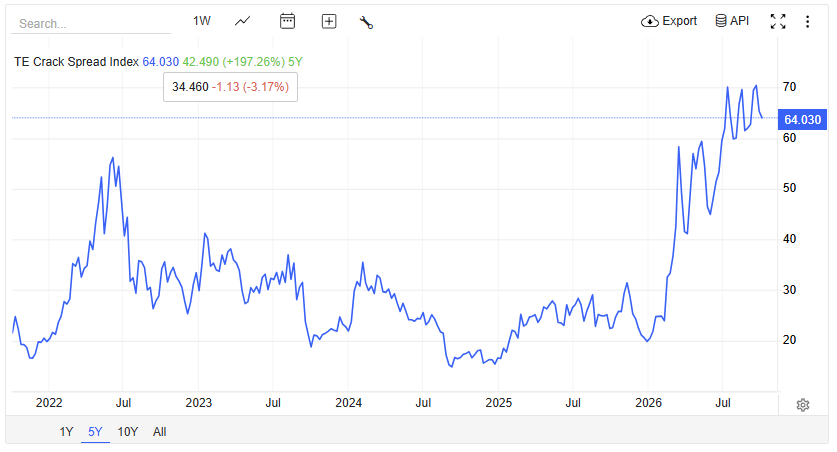
For now, I think the IPO will be a success, and the stock price should perform well enough in the early days. With so many people buying in with enthusiasm.
Whatever the case, this is still a historic IPO that will reshape Africa's capital markets.
P.S. This is for educational purposes only, and I am working with publicly available information, so I could be wrong or missing something. Not investment advice. Do your own research. Thanks for reading!
What is speculation?